Wednesday, June 30, 2010

Long Weekends, Holga photos and summer contests!

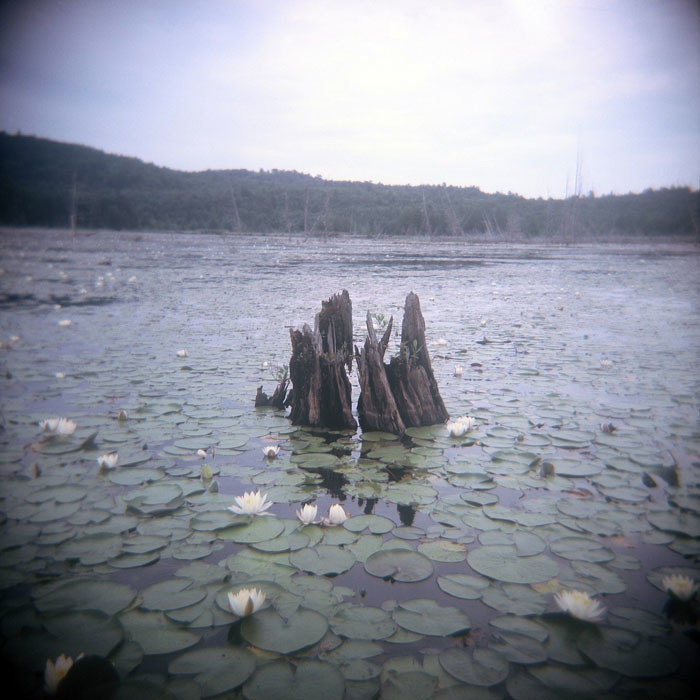
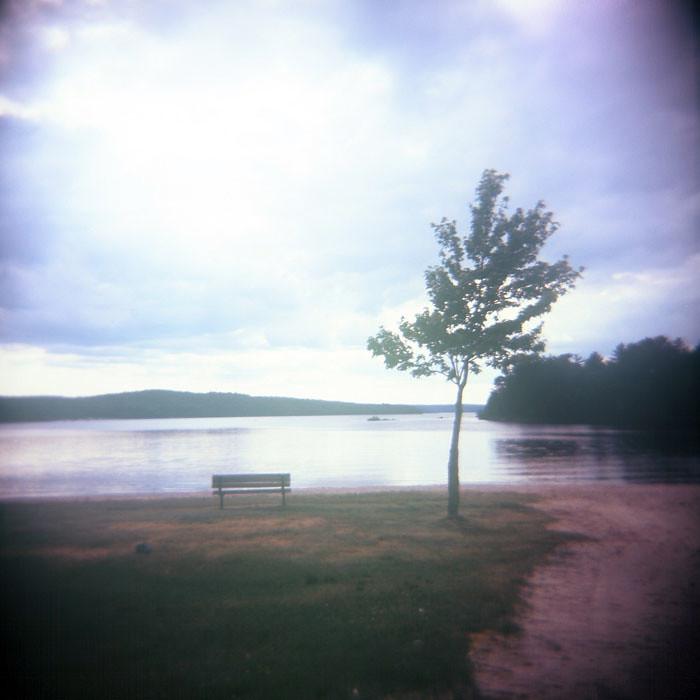
It's a long weekend for most North Americans out there - what plans do you have for the weekend?  Any exciting photo shoots or locations planned? Are you taking a trip?  Sometimes there is nothing like a good road trip to get the photo juices flowing.  Here are two Holga photos from my last trip that I wanted to share with you. 


Also, don't forget to enter Holgapalooza, or start thinking about what you'd like to enter!  There are early bird prizes, and there is also a chance to get featured on my blog for some of the winners!

Monday, June 28, 2010

Let them Take You Inside (Holga photo)

let them take you inside

Thursday, June 24, 2010

"Toyed With" - Juried Exhibition call for entries

"Toyed With" is a juried exhibition for photographers working in low-fidelity or alternative process photography. Images must be shot with a toy or vintage camera and/or printed in an experimental or alternative process.

 The exhibition will be held September 3–October 8 in the Red Room at Open Shutter Gallery, Durango, Colorado. Reception during Fall Gallery Walk and Durango Showcase of the Arts. Cash and photography related awards. Juror: Kit Frost. Entry fee: $25 for the first image, $5 each additional, unlimited entries. The prospectus is below or can be downloaded on their website.

Monday, June 21, 2010

Feature Photographer - Thomas Michael Alleman


I am back from vacation and have been eagerly waiting to share this interview with you all.  Many of you are probably familiar with Thomas Michael Alleman's work.  I am a big fan, and wanted to learn more about his work, his shooting methods and the stories behind the photos.  Hope you enjoy!


How did you get introduced to your first Holga and how long have you been shooting?

I began using the Holga in September of 2001, when my wife and I took a month-long trip to Europe, and I wanted a fairly unobtrusive camera that I could use to shoot big, square negatives. The weekend before we left I found a Diana at a garage sale in our neighborhood, and remembered its reputation among artists and students; it seemed like a perfect, lightweight solution. However, no right-thinking photographer travels with a single camera body, so I grabbed a Holga from my local Samy’s, thinking naively it was essentially the same crappy anti-camera that the Diana was said to be. I learned how wrong I was when, a month later, I returned from our trip and processed my film, and judged the Holga images to be far, far superior to the Diana negs. I began immediately planning my first Holga foray onto the streets of Los Angeles…


What is it about the Holga that draws you to it? Why do you shoot with it?

From 1997 until mid-2001, I spent quite a lot of time wandering in LA, shooting black-and-white “urban landscapes” with a succession of cameras, from Nikons to Hasselblads and then to an old Super-D 4x5. But I never achieved a negative or a print that resembled the pictures I thought I was making when I’d tripped the shutter, and no amount of extra, spectacular detail could reveal the pictures I knew were buried in those scenes. It was clear to me that some corrupting influence stood between my experience of the scene---as I encountered my subject and composed a picture of it---and the actual image that emerged in the darkroom. When I processed the film I’d shot in Italy, Austria, and the Czech Repiblic in the fall of 2001, I was astonished: those dreamy, soft-focus Holga shots were exactly what I’d been looking for. Apparently, the images my imagination had been pursuing thrived on less detail, not more. By obliterating the hyper-detailed, documentary specificity that modern multi-coated lenses have made commonplace, the Holga’s bizarre optics gave me access to a realm of richly-textured suggestion, impression and allusion that I couldn’t achieve in any of those earlier attempts at the lyrical landscape, which now seem banal and psychologically barren by comparison. The effect achieved, I think, is similar to the experience of hearing music that’s playing on a transistor radio in another room: you get the feeling of the song, for sure---the shape and size of it---but the details, the low-end, is mostly gone, replaced by that humming little whiff of static. That was the picture I wanted, and I think it’s the one I got.


Please tell me a little bit about your series "Sunshine & Noir"

I began photographing “Sunshine & Noir” in October of 2001. My wife and I returned from a month-long European trip to find that, in the long aftermath of the 9/11 terrorist attacks, most of my New York magazine clients had become intent on pictures of Ground Zero and the new Afghan War, and they didn’t have any immediate interest in the artists, scientists, politicians and CEOs that I’d been shooting for them in Southern California. Cast into joblessness by that grim new reality, and heartbroken and devastated by the events of 9/11---which haunted me for many years to come---I began to walk in LA’s many weird neighborhoods, consoled (perversely) by their strangeness and occasional danger. I took my Holgas with me, and began searching out visual metaphors for the alienation, desolation and disquiet I felt. Sorry to say, the streets of Los Angeles offer plenty of opportunities to photograph all those dark psychological states; I felt immediately that my melancholy mood sync-ed exactly with the environment I wandered through, and the pictures came quickly and easily.


What kind of challenges did you encounter while shooting this series?

Here in LA, the challenge I face most often comes from security guards who’ve been led to believe by their bosses that private property rights extend much, much further than they actually do. (Almost to a one, they firmly believe that it’s illegal to photograph a building from a public sidewalk.) But I think the attitude that makes those minimum-wage kiddie-cops so willing to defend their corporate employers is actually shared rather widely by the everyday Angelenos I encounter on the street: people in LA assume that everything is owned by The Man (whoever that might be), and that that ownership grants ultimate power and final discretion, and that That Dude wouldn’t want me hanging around, photographing his building or sidewalk or street-signs. In New York, San Francisco and elsewhere, it’s understood that artists and photographers, musicians, writers and poets---not to mention hustlers and gawkers and slackers---are all part of the groovy urban cavalcade; in LA, security guards want to see your permit, and the locals want to know what you think you’re doing.


If you had to choose - New York, or LA? 

If I had a great deal of money, I’d live in New York, in Manhattan or Brooklyn. It’s the most spectacular place I’ve ever been, but it’s a tough damned city to live in—wearying and remorseless---and, at my age, I couldn’t do it without all the psychic and material padding that a certain reliable wealth would provide. Los Angeles is far more forgiving, far more welcoming to hard-working folks who just want to contribute---and, at the very worst, you probably won’t freeze to death if you end up sleeping on the street.


What other cameras do you have in your arsenal?

Since I spent 15 years working for newspapers, and the last ten shooting portraits on location for national magazines, I’ve got the compliment of professional/commercial gear, old and new: three Nikon F-4 bodies, and all the lenses and strobes and cords; a very heavy traveling case with two Hasselblad bodies, five lenses and a half-dozen backs; an old Super-D 4x5 that I used to shoot Polaroid type-55 in; and my current workhorse collection of Canon digital bodies, lenses and speedlights. (Not to mention, three cases of Dynalights that go everywhere with me, and two rolling bags of grip equipment and light modifiers.)


Favourite photo film(s)? 

I’ve used Kodak TMAX 400 since it first appeared on the market in the mid-80s. I find it to be flatter and “creamier”---less abrasive---than Tri-X, and easier to take control of in the darkroom, or in Photoshop. (I’m really intent on creating optimal local contrast in all the different areas of the picture, so I need to start with a film that doesn’t have it’s own chemical agenda for contrast.) On most street safaris, I carry three Holgas, with two different kinds of film: I shoot one camera in bright daylight, using TMAX 400 and processing it normally; in open shade I use that same film, but push-process it a half-stop; in something less luminous than open shade, I use Ilford Delta 3200 and process it normally.


What inspires you?

Used bookstores; Lee Friedlander; NPR; Charles Mingus; Belgian ale; Joan Didion; Bob Dylan’s weird Americana; Robert Frank, Roy DeCarava, William Klein; Edward Hopper; Raymond Chandler; the New Yorker Magazine; “Night and the City”, “M”, “Touch of Evil”; Bruce Springsteen; LA at twilight; the Abstract Expressionists; the internet; James Ellroy; Gregg Toland; Bela Bartok; baseball stadiums; Henry Wessel, Stephen Shore, William Eggleston; Reyner Banham; a window seat in a crowded bar; fear, ambition and regret; my godson, Luke.


Do you have more Holga projects on the go, or planned for the future?

The Los Angeles project---“Sunshine & Noir”--- has almost run it’s course, but I’m still at work on the New York project, which approaches that city with the same spirit, techniques and method that I’ve used for the LA pictures. (That body of work is about 60 pictures deep, now; well past halfway to book-length status.) Throughout both those journeys, and during all my travels these last five or six years, I’ve been shooting panoramas with my Holgas---undercranking the advance to smash the frames together. I’ve got about 40 pretty good ones now, and maybe 25 I think are really fantastic. I’ll be working on those for another couple-three years, for sure.


Thomas Michael Alleman's Links:

Sunshine and Noir on Facebook
Sunshine and Noir Website 
AllemanPhoto.com
              

Friday, June 11, 2010

New Holga work

Hey Everyone,

I just finished posting my Flickr Friday selections over at Holga Blog - make sure you check them out - there are some gems this week!

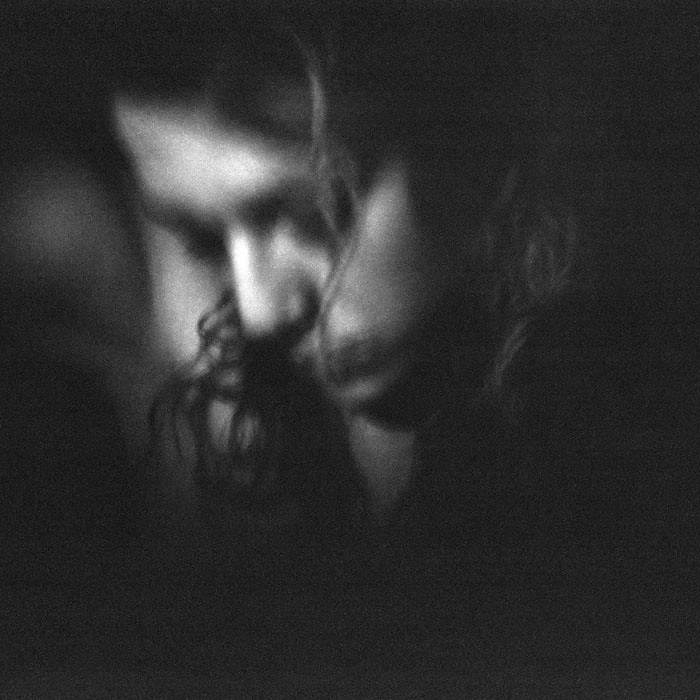
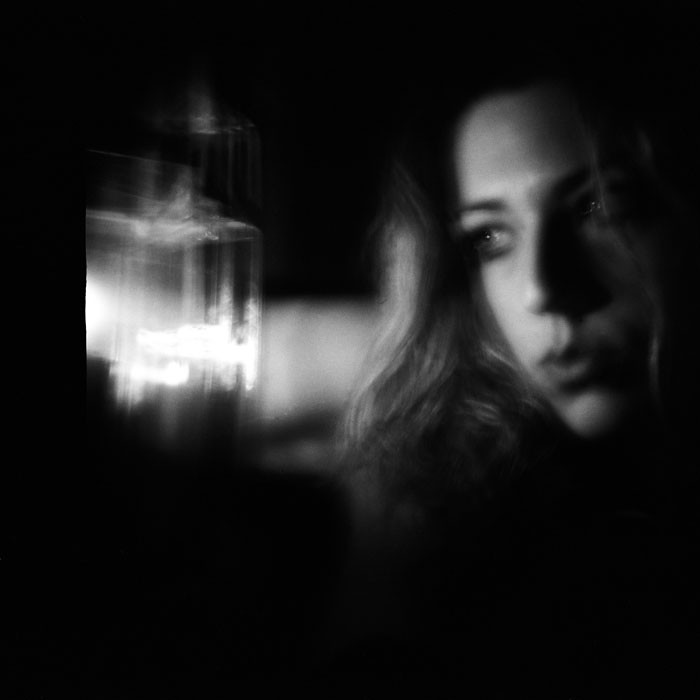
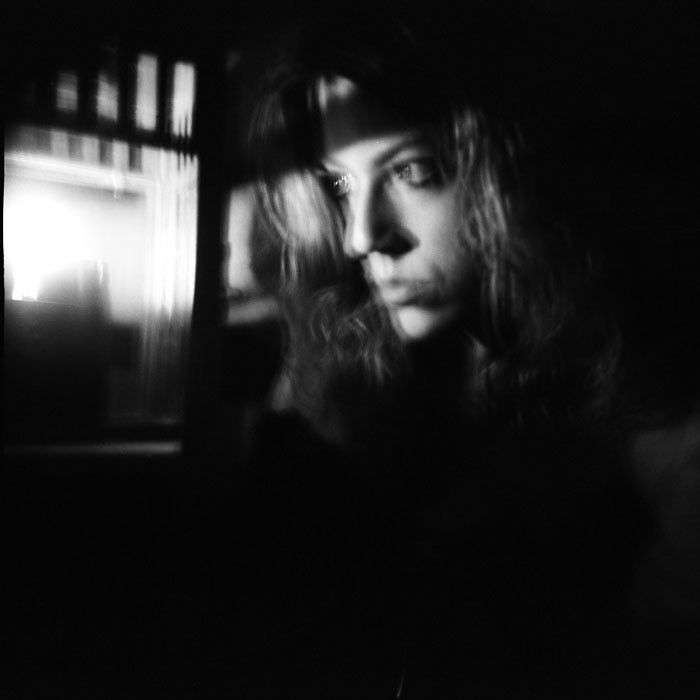
I wanted to share a few new self portraits that I've been working on.  I have more to post - but I will be gone for a few days on vacation.  Hope you all have a lovely weekend and show your Holga some love! I know I will.


PS: I have an awesome interview to post soon as well.  Join my Facebook page to see a teaser quote later tonight!  It just might be the most awesome Holga quote ever.

Friday, June 4, 2010

Holgapalooza 2010!

Holgapalooza was started last year as an annual contest by Light Leaks Magazine. In last year's contest they had a good turnout of participants, so they are going to keep it around as an annual thing.

Sponsors include Four Corner Store and Holga Inspire who are putting up a lot of the CASH for the prizes. The cash has increased considerably from last year - $400 for first, $250 for second, and $100 for third.

The entry fee is a flat $5 per submission - enter as many as you want.

There are also a couple of Photography retailers who are offering gift certificates that must be used 'in-store' - so these are the "regional prizes" and a 'best in show' will be chosen for these regions to get the gift certificates.

Winners will be published in the fall issue of Light Leaks Magazine.


Please enter and help spread the word about Holgapalooza.  You can download the poster above at this link.

Please print the poster off and post it anywhere you think it will get notice from Holga shooters. 

Enter at holgapalooza.com

Wednesday, June 2, 2010

Featured Photographer - S. Gayle Stevens

Today, I'd like to introduce you all to S. Gayle Stevens.  I had recently had the pleasure of discovering Gayle's work through some recent shows she has been a part of.  She received an honorable mention at the 2010 Krappy Kamera show, at the Pinhole Show at Rayko Photo, and at the Curious Camera show!

As you all know, I love self portraiture, and do alot of it myself using my Holga.  After having looked through Gayle's self portrait series, I was inspired to say the least, and her alternative processes combined with a Holga camera was something that I wanted to learn more about!  Hope you enjoy the interview!

Self Portrait with Patterns

How did you get introduced to your first Holga and how long have you been shooting?

I've been shooting about 20 years off and on at this point. I have been trying to remember how I got my first Holga....I'm not sure. I know I got my first ones, from Maine Photographic Workshop. It was either from reading about toy cameras in Nancy Rexroth's book Iowa, Nancy Howell-Koehler's book Creative Camera or Bob Hirsch's book Photographic Possibilities. Probably the latter. I have Dianas, Dories, Flotron, countless Holgas, plus myriads of other toy and old cameras. Can you have too many cameras?

Reclaimed

What is it about the Holga that draws you to it? Why do you shoot with it?

Low tech. It is all about creativity plus chance. Every camera is different and all these inconceivable things happen, accidental multiple exposures etc. I like the chance part a lot, the lack of ultimate control. It is also very unintrusive and a conversation starter. No one is afraid of a Holga, and people will come up to you and ask you about your strange camera. It is light, and easy to carry around. When I first started with the Holga I was shooting with a Hasselblad and a 4x5 view camera, plus pinhole cameras, very large ones.


Absinthe of Self


Solace


How did you get introduced to the wet plate collodion tintype process and why do you like working with it? Is it a difficult process?

I do a lot of different alt processes and I have done so for quite awhile. I wanted to take wet plate for a long time. I didn't think it was something you could teach yourself so I thought I'd take a workshop. I had wanted to take a class from the Ostermans. Well, one day I was perusing the internet for alt stuff and came upon f295 and low and behold they had a wet plate workshop with France Scully Osterman - but alas it was full. A couple days later while I was waiting for a student I went back to the site because I thought I might go to their symposium and miraculously someone dropped and I snapped the last place up.


Consumed

I fell in love with it immediately. I had been doing modern tintype, the liquid light process, but this is much cooler. It is so alchemy, and my grandfather was a mason. It is very, very hands-on and I am a hands-on person. I don't think it is really a difficult process. You have to have patience, and practice and most importantly be focused. You cannot multi-task and flow a plate. Wet plate is both slow and fast - you flow the plate and sensitize, then you have about 10-15 minutes to get your exposure before the plate starts to dry.  You develop and fix and wash. After you dry it over an oil lamp you varnish it with gum sandarac and lavender oil mixture, dry again over the oil lamp and everything smells like lavender. The whole oil lamp thing is kind of romantic. I'm not into the whole period re-creationist thing. I think that makes it too precious, somehow. Wet plate collodion is kinda like the Holga thing. Happy accidents on the plates, the mystery sense of chance, I like the flaws. Sometimes I think the flaws make the plate. it is like the spirits are coming out and speaking through you. When I flow a plate, there is this placid pool that draws you in and takes over - I like that place.

I was reading America and the Tintype by Steven Kasher, (great book btw) and the tintype is uniquely American. In Europe they had ambrotypes, and they had ambrotypes here, but the tintype was American. It was affordable and brought portraiture to everyone. The portrait lens that was most popular for wet plate, and still is, was a petzval portrait lens. Though faster than the Holga (about f4) it was known for it's vignetting but sharp center, so kind of like a Holga. I figure my Holga is a plastic petzval.


Are We Ever Truly Visible

Please tell me a bit about your self portrait series.

It's funny, I always resisted doing self-portraiture. I wasn't comfortable on that side of the camera. Collodion images can make you look much older too. I had some of my pinhole work at a show and a man I had spoken to before at other openings said I was one of the bubbliest, happiest people he had ever met and yet my work was so dark. I laughed, I never thought of my work as dark actually. I started thinking about how we are viewed by people and what is a true representation of a person. Is it who we think we are, or how we are perceived, or is it the part we play? Are we the sum of the parts that make up our lives? We are viewed by how we dress, what we drive, our possessions.  Are those objects - clothes, car, iphone - who we are? I realized that a lot of the work I had already done was self portraiture because it was individual elements from my life brought together. I started shooting myself - it started with 'Know Thy Self', which I first entitled 'What will happen when my inner darkness comes out'. I did it as individual pieces, but it later turned into a triptych. I started by accident shooting everything with my mouth open, I was counting. But then I thought, when I was a kid my grandmother would always get on me for having my mouth open, the flies will get in. Then there was that song I knew - an old lady who swallowed a fly... so anyway I just figured the spirits were emerging, lol. So everything now seems to be about dreams, recollections, history. I am older, my parents, grandparents have passed, my daughter is grown... I am reflecting. Did I mention I'm wordy?  :-)

 Emergence of Darkness

Know Thy Self

What other cameras do you have in your arsenal?

Too many!  I have 2 Nikon D2x's, a Panasonic Lumix, my walk around camera (literally when I take my walks for exercise). An 11x14 Seneca view camera, an 8x10 Kodak commercial view camera, 5x7 dry plate camera, a Russian knock-off dry plate 7x9.5 camera, 2 Hasselblads, 2 5x7 Burk and James view cameras which I converted to half plate for use at school. A ton of antique small cameras. 120, 620 125, 35, countless Dianas old and modern, countless Holgas. And more...oh I have a handmade wet plate camera that my partner made for me that has a very simple lens very soft, less depth of field than my Holgas, it has backs to shoot 2 1/4, 2 1/4 x 5 and 5x5.

Ophelia

Favourite photo film(s)?

My favorite films, though I shoot little or no film anymore since I discovered wet plate, are Velvia, Reala, and Tri-X. Though I've shot practically everything - I used to like infrared.


Parentheses


Your favourite Holga photo that you've taken?

Hmmm, good question. I think it changes. My favorite out of my past series is the swimming pool at West beach blvd and Barkely. It is looking out at the Gulf of Mexico, a pool that has turned into a pond since Katrina, the house is just a foundation, slab really. Plants are growing out of the pool, nature reclaiming the land. And out of my self series, 'Self portrait as an Encephalopod or I'm Dancing as Fast as I Can' because it is so silly. Just like a child playing. I was holding the camera right out in front of me spinning around just like kids do holding hands and spinning around in circles.
Pool West Beach and Barkley

Self Portrait as Encephalopod I'm Dancing as Fast as I Can

What inspires you?

Things that people overlook. The small things, everyday things, they speak to me.

Gayle's Links


Website: www.sgaylestevens.com
Facebook: http://www.facebook.com/sgaylestevens
Twitter: http://www.twitter.com/sgaylestevens

Thank you Gayle!

I am My Memory
AddThis

Bookmark and Share
Related Posts Plugin for WordPress, Blogger...

Twitter Updates

Followers